Good Ideas: To Kill or Not to Kill
Too Lush To Survive
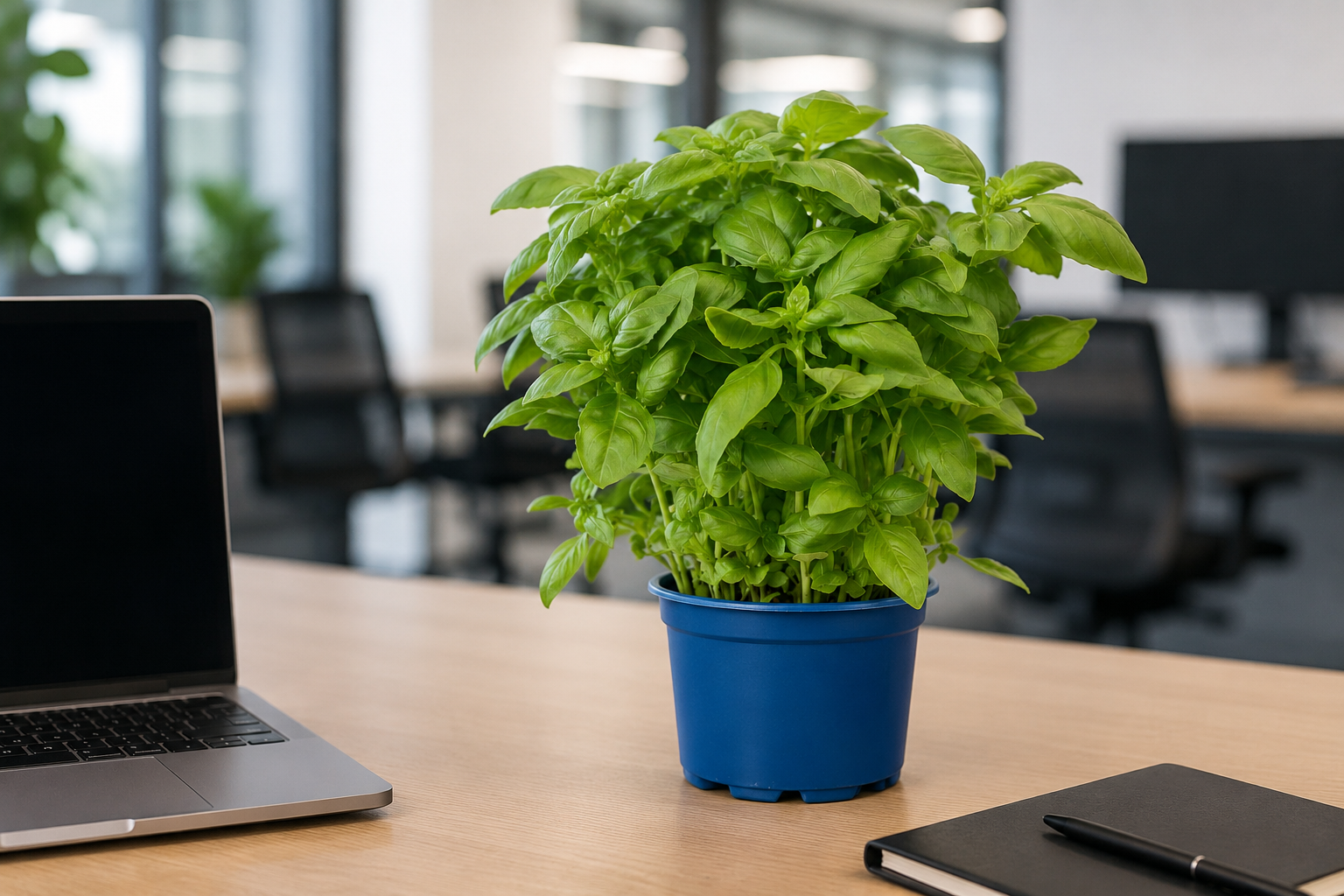
Have you ever bought basil from a supermarket?
It comes in a tiny pot, but looks lush and abundant. Two weeks later, it dies — no matter how nicely you treat it. What looks like a healthy plant is actually dozens of seedlings crowded together, competing for light, water, soil, and space. If you separated them into individual pots, many would thrive for months. But a single healthy basil plant wouldn’t look nearly as attractive on a supermarket shelf.
Supermarket basil is a product designed to satisfy your today's need for pesto. It looks attractive. It sells. It only fails if you mistake it for something designed to last.
The Cost of Cultivation
This lushness is exactly what we crave. And exactly what our tools are being optimized to produce.
Beautiful websites generated in seconds. Images from your head made real without expensive photoshoots. App prototypes that already work. Articles with twelve convincing arguments. Brand strategies. Financial models. Dashboards. Blog posts. Endless variations — all waiting to be selected.
The modern creative process now skips directly to the point where everything looks alive. And it feels like the hard work is done. Look — it already has shape, volume, the wow factor. You can almost taste the fruit.
But here is what changed, and what did not.
Starting something new is incredibly cheap. Seeds are almost free, and they sprout immediately. But the cost of sustaining did not disappear. Every living project still consumes something that cannot be easily scaled: energy, attention, maintenance. The ability to return to the same thing after the excitement fades. The willingness to prune and nurture an idea until it bears fruit.
The bottleneck used to be generating the prototypes. Now the bottleneck is deciding which ideas deserve a pot of their own.
The Ability to Kill
Before, friction killed many bad ideas early. Now friction arrives late. By the time doubt appears, the prototype already exists. Something is already alive.
And once something has sprouted, killing it feels wrong.
You can neglect a project. Delay it. Ignore it long enough for it to weaken on its own. Most people can eventually abandon something that already appears to be dying. But actively ending a healthy project feels like destruction. Like pulling a perfectly healthy living thing out of the ground.
It becomes important to ask yourself, before you even begin: if this is still alive in three months, competing with everything else in my life, will I be able to kill it?
Some people genuinely can. They can look at a living project, assess it cleanly, and pull it out of the soil without guilt. Most people cannot.
The same personality traits that make someone thoughtful, curious, responsible, and ambitious also make them poor project killers. They nurture things. They feel obligation toward effort already invested. They see potential everywhere — what something could become with just a little more attention.
And then they burn out, and the plants still die anyway.
The Lushness Trap
Imagine a young engineer just starting his career. Smart, curious, technically capable. Half his time goes to a startup, half to consulting work. He gets involved in everything: research, tooling, architecture discussions, experiments, internal initiatives. He absorbs an incredible amount. He has opinions on everything, ideas from everywhere. He has energy, vocabulary, ambition.
But none of his actual project deliverables are particularly good.
We already know he is capable. But all his capacity has been consumed by growth in every direction. Nothing has enough concentration to mature. From the outside, it looks lush. Internally, nothing is getting enough room to fruit.
Examples like this are everywhere, especially in our own day-to-day lives. By the time you notice you have overplanted, everything is already alive and competing.
You start a presentation and want to tell the client everything, even though you know that much information would leave them confused. You write an article with those twelve convincing arguments when you should have kept only three and made them land. You try to stay on top of every tool, every model, every trend, every conversation — but none of this translates into real leverage.
Everyone on LinkedIn appears to be launching ten things at once. And now, believably, some of them are.
Overplanting as Strategy
So, what is it about? Prioritization? Protecting your energy and resources? Partially yes, of course. But that has been discussed a million times.
I think a moderately overcrowded pot is very healthy. A life with slightly more projects than you can comfortably handle makes you step up. It keeps you searching for shortcuts, systems, help.
For learning, experimentation, curiosity — even heavy overplanting can be completely rational. For example, early in a career or during a period of deliberate exploration. Some people will stay in this mode their whole lives — they may never build something on end-to-end on their own, but they will show others what’s possible.
The mistake is not letting too many ideas sprout. The mistake is unconscious overplanting without understanding the trade-off. Confusing visible growth with sustainable growth without admitting that this approach may never allow you to bring even one idea to fruition.
There are two legitimate approaches, and they require different strategies:
Exploratory lushness. You are planting widely because you want to learn what grows, get lucky, see your options. Overplanting is the strategy. The best sprout might earn its own pot later.
Intentional cultivation. You want fruit — something mature, stable, that gets stronger over time. Here, every extra seed is a tax on the thing you actually care about.
Neither is wrong. But mistaking one for the other is how you end up with a pot full of dying plants and no harvest.
Beyond the Excitement
Supermarket basil is extremely well-designed for its purpose. The only problem appears when we mistake it for something built to last.
AI changed the economics of creation in a profound way. What used to consume a meaningful portion of effort — the prototype, the first draft, the mockup — can now happen in minutes. We can finally compare several living ideas side by side instead of committing blindly to the first good one.
That is a dream coming true.
But it also changes the ratio of where effort lives.
The prototype used to be a significant part of the journey. Not anymore. What once felt like perhaps 20% of the work can now feel closer to 2%. The remaining 98% still exists — refinement, patience, repetition. Which means the boring part feels longer than it did before.
And because of that, I admire people who can carry ideas beyond excitement.
People who can return to the same work after novelty fades, resisting the temptation to begin something new instead. Who can kill good ideas in order to protect better ones. Who can tolerate the long, invisible middle where nothing new is sprouting, but something deeper is finally growing roots.
The world is optimizing for instant creation and immediate consumption. Building something to last is becoming more difficult, less incentivized — and because of that, hopefully more valuable.


 Copied!